Saturday

Americans might be known for their love of the bald eagle. But the official bird and symbol of the United States also likes to call Canada home.

Emmett Blois was out river rafting when he and his friends spotted a bald eagle in trouble. They were on the Shubenacadie River in Nova Scotia when they noticed a group of bald eagles flying away because of a tidal bore but one didn’t. Instead, she got hit by a wave and couldn’t get out of the sand belt or water.

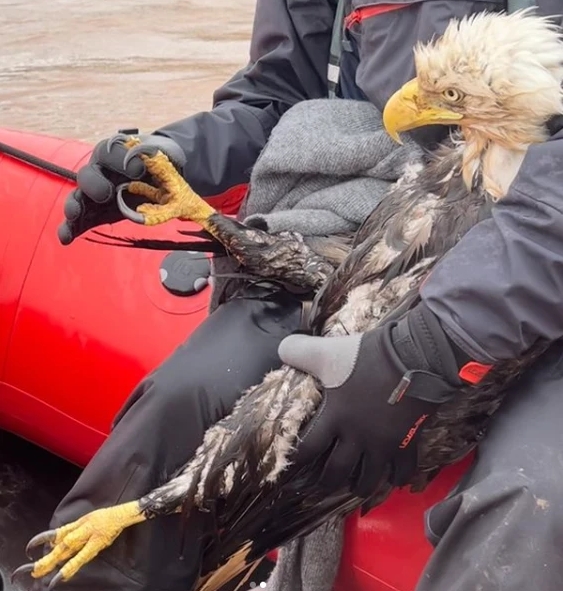
The bird was flapping and trying to get to safety when they pulled up alongside of her. They pulled her out of the water and they noticed her leg was injured so they opted to take her to Hope For Wildlife Rescue. Emmett said that as he held the eagle her heart was pounding hard but after around 15 minutes of holding her, her heart rate settled and she became surprisingly calm.

During the hour long trip back to shore, Emmett noted that the eagle’s eyes were the most beautiful he’d ever seen.

Once the eagle was in the care of Hope for Wildlife Rescue, they discovered that her leg had ligament damage. But once she was healed, Emmett was able to come and re-release her into the wild.

“It was huge,” said Blois. “It’s a wild animal. He’s got huge talons. I didn’t feel comfortable anyone else getting him beside myself just in case someone got hurt — I’d rather it would have been me. He bite me once but it didn’t hurt. It wasn’t bad. Just more of a shock. I wasn’t really afraid of him.”

Once Blois got the bird into the boat and wrapped it up in a sweater, they still had an hour to get back to the company’s lodge, where the folks from Hope For Wildlife were waiting to help.

“I kind of had my hand on his chest, and his heart was just pounding and then towards the end of trip, his heart slowed down,” said Blois.
Blois still doesn’t know if the animal is a male or female – although Blois suspects female from its size (females are typically larger than males) – and they’re waiting the outcome of x-rays to determine the extent of the injuries.

“His foot and leg was really, really swollen,” he said.

Source

VIDEO


Homeless dogs in Brazil regularly attend church services to meet their new owners. If you think that abandoned dogs magically turn to God for help, unfortunately, it’s not exactly the case, but this extraordinary scenario can still be encountered every Sunday at Paróquia de Sant’Ana Gravatá.

Father João Paulo Araujo Gomes who is the head of the parish of Santana in the city of Gravatá in Brazil does the kindest and most inspiring thing for stray dogs around his church. He invites homeless animals from the streets to become a part of his service to help them find loving homes. The doors of his church, as well as his big heart, will always be open for dogs. And who wouldn’t attend Mass if some adorable dogs were involved?

Dogs provide us with unconditional love, laughter, and precious memories and it’s nothing less than fair to pay them back. Whether you are a faithful believer in God or not, as long as you believe in kindness and compassion, we can slowly make the world a better place.

Father João Paulo is housing abandoned animals in his rectory away from the dangers of the streets. However, he brings his furry friends to the church service in hopes that they will be noticed. This is why every Sunday, the priest makes sure the dogs are in the center of attention, an honorable spot where everyone can see them. As loyal and as important they might look in front of the altar, dogs will be dogs and they are always in for some petting. Being excited and adorable as they are, pups often join the priest at the altar for some attention and belly rubs, and Father João never disappoints!

“They will always be able to enter, sleep, eat, drink their water and find shelter and protection, for this house is of God and they are of God,” Father João Paulo wrote on Facebook. He engages the large church’s community in his dog rescue mission by encouraging them to invite people who are interested in bringing home a new family member. His compassionate actions raise awareness and help to make a change, starting from Gravatá.

Many rescued dogs are neglected, affected by cruel street life and in desperate need of urgent help and attention. The compassionate Father has not only given a temporary home and affection to these poor creatures, but he also takes good care of them, feeds them and provides all the necessary medical treatment. Their spectacular recoveries warm our hearts and show what love and care can do. A small act of kindness that makes an extreme difference for the forgotten dogs of Gravatá.

Thanks to the priest’s actions, the number of abandoned dogs on the streets of Gravatá, which has 228,000 inhabitants, has reduced substantially. Dozens of stray dogs have already found loving homes. In fact, after meeting so many faithful animals in person, the kind-hearted priest couldn’t help but adopt some himself.

Source


Friday

Julie McSorley and Liz Cottriel were kayaking in California’s San Luis Obispo Bay when the unthinkable happened. Suddenly, the two were engulfed by a giant humpback whale and spent a moment in its mouth.

The entire thing was caught on video by people nearby, and it happened so fast that the two women didn’t even realize they were in the whale’s mouth until they saw footage after the fact.

The incident occurred in fall 2020 when humpback whales had been active in the bay near Avila Beach. Kayakers and paddlers came to the area to watch them feed—McSorley being one of them. So when Cottriel came for a visit, McSorley convinced her friend they should go again, despite her pal's apprehension.

“Her reaction was, ‘No, I don't like the ocean. I'm scared of sharks. I'm scared of anything I can't see in the water.' And I so ignorantly told her, ‘Oh, they're never going to dump you over. The kayaks are very stable. I've never had an issue,'” McSorley recalled.

Things were tame for the first hour in the water. The two women, in kayaks and wearing life vests, would watch for swarms of fish—aka “bait balls”—and wait for the whales to feed, then move to that place a few minutes later. McSorley and Cottriel were waiting and watching for the next bait ball when they saw that little fish were all around them.

“So I knew it was going to be very close, but again, I'd seen whales breach right next kayaks before. So my mind was like, this is going to be, you know, super cool,” McSorley shared. “And then all of a sudden the boat lifted up and we were dumped in the water very, very quickly.”

Cottriel said that she could see the whale’s mouth as it closed in on them and was sure that she was a goner. “Next thing I know, I'm under water.” Luckily, the women return unscathed, now with an amazing story to tell. Source

VIDEO


The Galápagos giant tortoise (Chelonoidis niger) is an incredible species. The massive reptiles can live well over a century and are native to the unique environment of the Galápagos Islands.

These living relics can weigh over 500 pounds and are difficult to breed. Optimistic estimates put their numbers at 10,000 to 15,000 tortoises alive today in the wild. While these creatures are already rare, a tiny baby tortoise has been born at a Swiss Zoo with albinism, making it an even greater rarity.

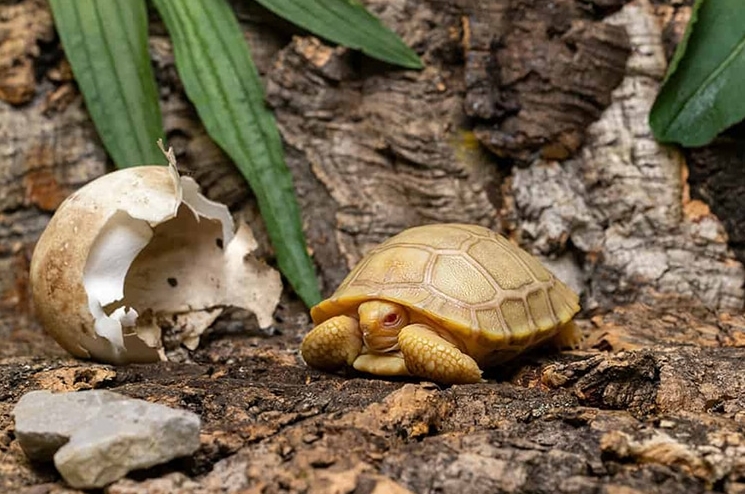
The Tropiquarium, a zoo in Servion, Switzerland, is to be congratulated for the arrival of the new addition. Eggs were laid by a 220-pound female on February 11, and then the two babies hatched on May 1 and May 5, respectively. Both weighed 1.8 ounces at birth. They were whisked away to be warmed in an incubator for a month. They have just now made their debut. Only one of the two has albinism, a genetic condition which prevents the production of melanin. The itty bitty reptile has a white shell, white skin, and red eyes (due to visible blood vessels).

“We were surprised to discover an albino baby,” zoo staff said in a statement. “This is the first time in the world that an albino Galápagos tortoise has been born and kept in captivity.” None have been recorded in the wild either. Zookeepers suspect albinism may appear in 1 in 100,000 tortoises, although this is speculative. The gene is recessive, so tortoises may carry it without anyone knowing. Two recessive genes must combine to appear visually.

The babies are a brilliant addition to the zoo, but they are remarkable for many reasons. The Galápagos giant tortoise is an aggressive mate, with much biting involved. When babies are born in the wild, the males and females are initially indistinguishable. However, warmer conditions during incubation produce females, while cooler temperatures produce males. These young creatures also mysteriously vanish for the first five years of their life. It is surmised they shelter under debris on their island home, hiding from predators. Around five years old, they suddenly emerge, too big for hawks to carry away.

It is unsure exactly how long the new baby tortoise might survive, as albinism can inhibit the survival mechanisms of an animal by making them more vulnerable to predators and sunlight. However, the unique creature and its sibling are part of an important mission to save a species under extreme pressure. It is unclear how global warming may affect the gender ratio among the tortoises, but it is certain that global warming will pose challenges for the species. The birth of the baby turtles is, therefore, to be celebrated.

Source


Wednesday

Dramatic video captured the moment a horse ran back into a raging wildfire to save other horses, including a small foal. It had been brought to the relative safety of a road, but charged back towards danger to make sure its stablemates were okay.

The Easy Fire is burning in Simi Valley, California, where it devastated 1,000 acres of land in just three hours. Footage of the horses emerged yesterday showing ranchers trying to get the animals to safety on the Tierra Rejada Road.

The incredible footage shows the black horse break away and circle back, then return again as soon as it reaches its family.

According to CBS, all the horses on the ranch were moved safely excepted one called Mayer, 28, which had to be put down because she broke her two front legs while running.

The so-called Easy fire, which forced 26,000 people to flee, broke out just before dawn off a road named Easy Street, sending a wall of flames racing across scrub-covered slopes.

It started around 30 miles from a separate conflagration burning in hills near the Getty Center museum that has displaced thousands of residents from some of the city’s most affluent neighborhoods.

The Getty museum houses a collection that includes paintings by Van Gogh, Rembrandt and Manet, ancient Greek statues and an array of manuscripts.

The Reagan Library, Getty Center and Getty Villa in Malibu were all forced to close due to the flames and thick clouds of smoke, although all three facilities were said to be out of imminent danger by evening.

Source
VIDEO


Friday

For the first time in four years, a litter of red wolf pups was born in the wild. The six pups were found in the Alligator River National Wildlife Refuge in North Carolina last week. The news brings hope for the species, which is currently listed as endangered.

“As the sights and sounds of spring began to unfold on Alligator River NWR this April, something monumental was also unfolding on the landscape… a new litter of red wolf pups and renewed hope for survival of a species! During the week of April 18, Red Wolf Recovery Program Staff confirmed a litter of 6 wild red wolf pups (4 females, 2 males) born to mother 2225 and father 2323 (to be confirmed through genetic testing),” the U.S. Fish and Wildlife Service’s Red Wolf Recovery Program stated on Facebook.

Red wolves were once abundant in the U.S., but hunting and habitat destruction drove population numbers down. Now, few remain in the wild and their range is a fraction of what it once was.

Prior to the new pups, there were only eight known red wolves left in the wild, and experts estimate there to be about 15 to 17 total. There are 241 red wolves in captivity. The species was first considered as “threatened with extinction” in 1967, and in 1980, the red wolf was even considered “extinct in the wild,” as reported by NPR.

According to U.S. Fish and Wildlife Service, captive breeding programs saved the species. By 2012, there were 120 red wolves in the wild. But continued threats from humans led to a major decline again. Less than 10 years later, only the estimated 15 to 17 wolves remained in the wild as of 2021. The species is today considered endangered under the Endangered Species Act.

The last birth of red wolf pups occurred in 2018, when four pups were born, and no pups were born in the wild in subsequent years — until now.

“This new litter is the first wild-born litter of red wolves since 2018. This red wolf pair was formed through the combination of several management actions and the two red wolves subsequently following their natural instincts in pairing, establishing their territory and mating,” the Red Wolf Recovery Program shared on Facebook. “Every generation yields a new born hope for the red wolf… a cause for joy and celebration!”

Source


Wednesday

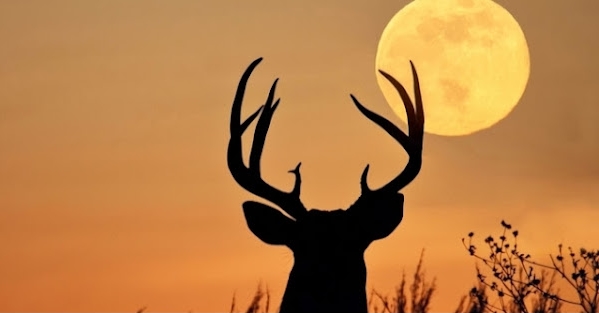
The third supermoon of 2022 will grace the night sky on Wednesday. It's also known as a buck moon because it falls in July. The name doesn't come from its appearance — you won't see the shape of a buck on the moon's surface or anything. Instead, it refers to something that's happening in nature.

"The full Moon in July is called the Buck Moon because the antlers of male deer (bucks) are in full-growth mode at this time," as The Old Farmer's Almanac says. "Bucks shed and regrow their antlers each year, producing a larger and more impressive set as the years go by."

What is a supermoon? What makes this particular buck moon a supermoon is something else. Supermoons by definition happen "when a full moon coincides with the Moon's closest approach to Earth in its elliptical orbit, a point known as perigee," according to NASA.

"During every 27-day orbit around Earth, the Moon reaches both its perigee, about 226,000 miles (363,300 km) from Earth, and its farthest point, or apogee, about 251,000 miles (405,500 km) from Earth."

Supermoons happen when a full moon comes within at least 90% of the perigee. That happens Wednesday afternoon at 2:38 p.m. ET. What to look for

Supermoons in general appear 17% bigger and 30% brighter than when the moon is at its farthest point away from Earth, according to NASA. Supermoons are slightly bigger and brighter than most full moons, too. Just because it's bigger and brighter doesn't necessarily mean you'll see it unaided, so binoculars may give you a better view.

The best times to view the buck moon will be at moonrise and moonset. You can find your local times for those here.

If it's cloudy where you are on Wednesday, don't fret too much. The moon will appear full for about three days, through early Friday morning, so there are still viewing opportunities.

The name "Buck Moon" arises from a traditional name from the Algonquin tribes, according to a NASA July 2021 moon guide, in what is now the northeastern United States, eastern Ontario and southern Quebec. That said, the moon may not be called the same name by all Algonquin peoples or by all Indigenous cultures; for example, another name attributed to the Algonquin for the July moon is the Thunder Moon. Rao names a few other Indigenous July moon names in his column.

Europeans (traditional) called this the Hay Moon due to the haymaking season, and sometimes the Mead Moon. Hindus, Buddhists, and Jains may call July's moon the Guru Full Moon (Guru Purnima), "celebrated as a time for clearing the mind and honoring the guru or spiritual master," NASA said.

Theravada Buddhists may call July's moon the Asalha Puha (also known as Dharma Day or Esala Poya – a festival celebrating Buddha's first sermon, NASA said). July's moon also marks the beginning of a three-month annual Buddhist retreat called Vassa.

July's full moon has also been called the Full Thunder Moon and the Full Hay Moon, as July is considered to be the season with the most frequent thunderstorms and the time of year when farmers harvest, bale and stow hay for the upcoming winter.

July Moon names from different cultures Raptor Moon (Hopi). Smoky Moon (Maidu). Ripe Moon (San Juan). Crane Moon (Choctaw). Claiming Moon (Celtic). Rose Moon (Neo Pagan). Peaches Moon (Natchez). Ducks Moult Moon (Cree). Ripening Moon (Mohawk). Grass Cutter Moon (Abernaki). Buffalo Bellow Moon (Omaha). Hungry Ghost Moon (Chinese). Ripe Squash Moon (Algonquin). Raspberry Moon (Anishnaabe). Salmon River moon (Wishram). Mead Moon (Medieval English). Middle Summer Moon (Ponca). Middle Summer Moon (Dakota). Red Berries moon (Assiniboine).

Young Corn Moon (Potawatomi). Buffalo Bellows Moon (Arapaho). Wild Red Cherries Moon (Sioux). Corn Popping moon (Winnebago). Ripening Moon (Passamaquoddy). Horse Moon, Ripe Moon (Apache). Summer Moon (Colonial American). Dropping Deer Horns Moon (Kiowa). Ripe Corn Moon, Hay Moon (Cherokee). Sun House Moon (Taos Native American). Claiming moon (Full Janic), Blessing Moon (Dark Janic). Little Harvest Moon, Blackberry Moon, Little Ripening Moon (Creek). Hay Moon, Buck Moon, Thunder Moon, Summer Moon (Algonquin).

VIDEO Full Buck Moon July 2022

Riaan Naude, who regularly posted photos of himself with the carcasses of lions, elephants and giraffes, was shot dead by unknown assailants near Kruger National Park.

A South African wildlife trophy hunter who regularly posted photos of himself with the bodies of giraffes, lions and elephants has been killed.

Riaan Naude was shot to death near his car in the eastern South African province of Limpopo, which is home to part of the country’s Kruger National Park.

The 55-year-old was the owner and founder of Pro Hunt Africa – a group that organised paid hunting trips for customers. Naude was found by police on Monday “lying with his face up” with “blood on his head and face," according to a police spokesperson.

Some local reports suggest that Naude was killed shortly after he stopped on the side of the road after his car overheated. Another car is believed to have pulled up alongside him before two men got out and shot him from close range. The suspects then quickly drove off after stealing one of Naude’s guns.

An investigation into Naude’s murder is underway, and there's currently no suggestion that he was targeted because of his trophy hunting – a lucrative activity that remains legal in South Africa.

In February, to the frustration of wildlife groups, the South African government announced an increase in the quotas for the number of endangered elephants, black rhinos and leopards that hunters can kill.

More than 125,000 animals are killed each year for trophies. That averages to approximately 126,000 animals killed and imported into our country each year. Between 2008 and 2017, nearly 40,000 animal trophies from African elephants, just over 8,000 from leopards, and 14,000 from African lions were exported worldwide.

Source


It's hard enough for a skilled photographer to convince an animal to strike a pose, so it doing so on its own is incredible luck. And if it weren't for a trail cam at the non-profit Wolf Conservation Center (WCC) in South Salem, New York, we might have never seen this striking image.

In fall 2019, a Mexican gray wolf family gathered for a storybook photo as a group of six lined up on large logs in a majestic “V” formation. Most of the creatures are looking at the camera as if they are following the directions of a photographer. But amazingly, this shot is completely candid with no human intervention.

Wolves are incredible creatures. They are social animals who live in family units that are referred to as packs. This particular group comprises 11 members with parents Rosa and Alléno at the head of the family. Their nine pups were born in spring 2018, and as the WCC observed the family, they named the little ones in honor of female conservationists who work to protect and preserve wildlife.

When Maggie Howell, executive director of the WCC, looks at the family photo, she sees it as a symbol of the species clawing its way back from extinction. “The Mexican gray wolf or ‘lobo’ is the most genetically distinct lineage of wolves in the Western Hemisphere, and one of the most endangered mammals in North America,” Howell explains.

“By the mid-1980s, hunting, trapping, and poisoning caused the extinction of lobos in the wild, with only a handful remaining in captivity.” Today, 196 Mexican gray wolves remain in the wild in the U.S.

The WCC is part of the active effort to save the Mexican gray wolf. “[We] are one of a network of facilities participating in the Mexican Wolf Species Survival Plan—a bi-national initiative whose primary purpose is to support the reestablishment of Mexican gray wolves in the wild through captive breeding, public education, and research.”

In 2018, Mexican gray wolves Rosa and Alléno had a litter of nine pups. Here are a few of them when they were young…

In 2021, a mitochondrial DNA analysis of North American wolf-like canines indicates that the extinct Late Pleistocene Beringian wolf was the ancestor of the southern wolf clade, which includes the Mexican wolf and the extinct Great Plains wolf. The Mexican wolf is the most ancestral of the gray wolves that live in North America today.

Source

VIDEO


Stats

Archives

Pages