Showing posts with label lion. Show all posts
Wednesday

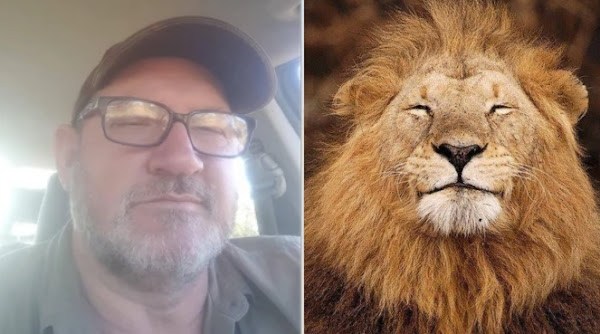
Riaan Naude, who regularly posted photos of himself with the carcasses of lions, elephants and giraffes, was shot dead by unknown assailants near Kruger National Park.

A South African wildlife trophy hunter who regularly posted photos of himself with the bodies of giraffes, lions and elephants has been killed.

Riaan Naude was shot to death near his car in the eastern South African province of Limpopo, which is home to part of the country’s Kruger National Park.

The 55-year-old was the owner and founder of Pro Hunt Africa – a group that organised paid hunting trips for customers. Naude was found by police on Monday “lying with his face up” with “blood on his head and face," according to a police spokesperson.

Some local reports suggest that Naude was killed shortly after he stopped on the side of the road after his car overheated. Another car is believed to have pulled up alongside him before two men got out and shot him from close range. The suspects then quickly drove off after stealing one of Naude’s guns.

An investigation into Naude’s murder is underway, and there's currently no suggestion that he was targeted because of his trophy hunting – a lucrative activity that remains legal in South Africa.
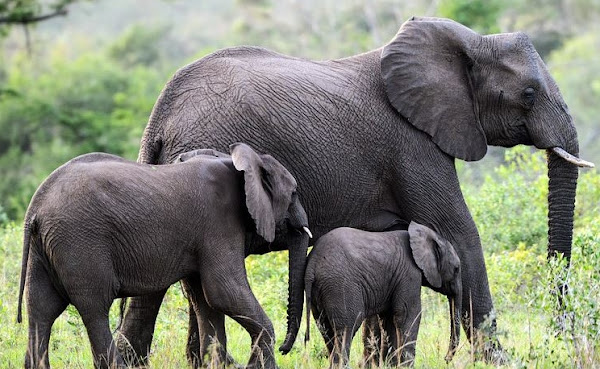
In February, to the frustration of wildlife groups, the South African government announced an increase in the quotas for the number of endangered elephants, black rhinos and leopards that hunters can kill.

More than 125,000 animals are killed each year for trophies. That averages to approximately 126,000 animals killed and imported into our country each year. Between 2008 and 2017, nearly 40,000 animal trophies from African elephants, just over 8,000 from leopards, and 14,000 from African lions were exported worldwide.

Source

Sunday

A territorial terrapin has been captured showing two lions who is boss as it aggressively shoos them away from its waterhole.

In the video the tiny animal is seen spooking the male and female lions by popping up in the water inches from their noses and charging towards them as they try to quench their thirst in Greater Kruger Park, South Africa.

The unusual footage was captured by safari guide, Reggi Barreto, 30, while on safari with a private guest near the Sand River in the MalaMala Private Game Reserve.

Mr Barreto said: 'There were plenty of elephants and general game along the way as we headed into the area where the lions were.'I knew the lions would look for water to drink and we positioned ourselves in the perfect spot with the sunlight in our favour, ready for the sighting.

'What came next we did not expect – I was pleasantly surprised when the terrapin came out of the wallow towards the male and then the lioness.'

The guide said that although the lions were mildly annoyed by the small reptile the lion and lioness continued to drink from the fresh waterhole until satisfied.

Despite both lions having blood on their chins from recently hunting a zebra foal the terrapin seemingly had no fear as it popped up just inches from the predators' mouths.Mr Barreto added: 'Both lions drank their fill despite the interruptions from the terrapin and then headed back closer to the zebra foal to lay down, as it was a very humid day.'

'It was an incredibly rare sighting for me to film – watching the terrapin approach the lions that had blood on their chins from the zebra. It seems as though the terrapin was actually more interested in getting some of that blood, as opposed to 'chasing the lions away'.

Mr Barreto said that capturing the right moment 'is all about understanding animal behaviour and predicting what they will do next.'

He added: 'It requires plenty of patience searching for animals and spending time with them to see how the sighting will pan out.'

Source

VIDEO


Tuesday

Throwing snowballs at lions does not sound the safest - or kindest - way to enjoy yourself. But when the animals are contained in a zoo enclosure and you are firing down on them from behind a safety barrier - it is a little easier to be brave.

These lions certainly looked less than pleased when they were pelted with snow by laughing visitors, including children, at Hangzhou Zoo in Zhejiang Province, eastern China.

The attack was reportedly launched by one young man, who began to take aim at the big cats with a barrage of snow and ice. The attack clearly frightened the helpless animals, with the lioness swiftly taking cover under a wooden plank.

The male line used a tree trunk as cover, with both eyes fixed on the visitors, as the missiles rained into the enclosure, ChinaSmack.com reports.

The man apparently laughed as he hurled the snow, with a group of other visitors, including a number of children, also starting to take aim at the lions.

One of them used large chunks of snow and threw them down with all of his strength, according to the website.

The frightened lions took shelter together in the corner of their pen as they tried to escape the new onslaught. The male lion roared in anger at his tormentors as they began to stroll away.

Sadly the lions were not the only animals to be pelted with snow, with some of the crowd also pelting the zoo's alpacas, monkeys, a giraffe, a tiger and other creatures.

Thursday

A rhino poacher is believed to have been attacked by an elephant and then eaten by a pride of lions during an incident in South Africa’s Kruger national park.

Police brigadier Leonard Hlathi said police received information that a group of men had gone into the park on 1 April in order to hunt rhino, “when suddenly an elephant attacked and killed one of them”.

“His accomplices claimed to have carried his body to the road so that passersby could find it in the morning. They then vanished from the park.”

Hlathi said the group of men left the park and informed a family member of the deceased what had happened, who contacted police. Park rangers began a search for the man, on foot and by air, but could not locate the man at first due to failing light.

Rangers and police returned on 4 April and were able to find the man’s remains in the Crocodile Bridge section of the park.

“Indications found at the scene suggested that a pride of lions had devoured the remains leaving only a human skull and a pair of pants,” said Isaac Phaahla, the general manager of communications for the Kruger national park.


Three men, aged between 26 and 35, were arrested in the KaMhlushwa and Komatipoort precincts, police said in a statement.

The suspects appeared in court on 5 April charged with possession of firearms and ammunition without a licence, conspiracy to poach as well as trespassing. An inquest has also been opened into the cause of the man’s death.

The managing executive of Kruger national park said: “Entering Kruger national park illegally and on foot is not wise, it holds many dangers and this incident is evidence of that. It is very sad to see the daughters of the deceased mourning the loss of their father, and worse still, only being able to recover very little of his remains.”


South Africa, which is home to almost 80% of the world’s rhinos, has been hard hit by poaching. More than 1,000 rhinos were killed by poachers each year in South Africa between 2013 and 2017. The number dropped to 769 for 2018, with poachers targeting the animal for its horn, according to Save the Rhino.

Kruger national park has the largest concentration of rhinos on the planet, and has been a target for poachers. In 2015, more than 70% of all rhinos known to be poached in South Africa were poached in the park.


Monday

A rhino poacher is believed to have been attacked by an elephant and then eaten by a pride of lions during an incident in South Africa’s Kruger national park.

Police brigadier Leonard Hlathi said police received information that a group of men had gone into the park on 1 April in order to hunt rhino, “when suddenly an elephant attacked and killed one of them”.

“His accomplices claimed to have carried his body to the road so that passersby could find it in the morning. They then vanished from the park.”

Hlathi said the group of men left the park and informed a family member of the deceased what had happened, who contacted police. Park rangers began a search for the man, on foot and by air, but could not locate the man at first due to failing light.

Rangers and police returned on 4 April and were able to find the man’s remains in the Crocodile Bridge section of the park.

“Indications found at the scene suggested that a pride of lions had devoured the remains leaving only a human skull and a pair of pants,” said Isaac Phaahla, the general manager of communications for the Kruger national park.


Three men, aged between 26 and 35, were arrested in the KaMhlushwa and Komatipoort precincts, police said in a statement.

The suspects appeared in court on 5 April charged with possession of firearms and ammunition without a licence, conspiracy to poach as well as trespassing. An inquest has also been opened into the cause of the man’s death.

The managing executive of Kruger national park said: “Entering Kruger national park illegally and on foot is not wise, it holds many dangers and this incident is evidence of that. It is very sad to see the daughters of the deceased mourning the loss of their father, and worse still, only being able to recover very little of his remains.”


South Africa, which is home to almost 80% of the world’s rhinos, has been hard hit by poaching. More than 1,000 rhinos were killed by poachers each year in South Africa between 2013 and 2017. The number dropped to 769 for 2018, with poachers targeting the animal for its horn, according to Save the Rhino.

Kruger national park has the largest concentration of rhinos on the planet, and has been a target for poachers. In 2015, more than 70% of all rhinos known to be poached in South Africa were poached in the park.


Friday

This adorable set of pictures shows a pride of lions cuddling up for a family photo at a wildlife park in South Africa.

In one of the cute images the largest male lion is lying with his eyes closed while a female and another male rub their faces against him and a younger animal climbs on top.

Meanwhile in another picture the animals strike a more menacing pose with the leading male baring his teeth while the female gazes watchfully ahead.

Jihad Adnan, the Lebanese photographer who took the pictures, said he was expecting the big cats to fight but was delighted by the heartwarming display he saw.

The 37-year-old, who has been a nature photographer since 1999, snapped the images at a lion park in Johannesburg, saying: 'I saw the lions getting close to each other so I thought they would fight.

'But suddenly, after the lioness came with her cub, they started licking each other. I felt the love between them - the lion in the middle is the one saving this family.'


The lion lives in groups of related individuals with their offspring. Such a group is called a "pride". Groups of male lions are called "coalitions". Females form the stable social unit in a pride and do not tolerate outside females. Membership only changes with the births and deaths of lionesses, although some females leave and become nomadic.


The average pride consists of around 15 lions, including several adult females and up to four males and their cubs of both sexes. Large prides, consisting of up to 30 individuals, have been observed. The sole exception to this pattern is the Tsavo lion pride that always has just one adult male. Male cubs are excluded from their maternal pride when they reach maturity at around two or three years of age.


Tuesday

These heart-warming images show an incredibly rare leucistic white lion cub playing in the wild.

Taken by wildlife photographer Lyle McCabe in Kruger National Park, the snaps show the young lion cub, which appears completely white but is not albino, playing with its siblings while its doting mother looks on. Lyle said the cub had been passed a leucistic gene by both parents – resulting in it having a partial loss of pigmentation in its fur. The 30-year-old said: “I was absolutely mind blown with this sighting.

“We had known the cubs had been born about a month before but as per company protocol we had moved away from the area for walking, tracking and driving off-road in order to ensure the safety of the animals.

“I arrived at the spot and waited about 10 minutes before we saw movement in the thicket, and out came the mother with a tawny youngster in her mouth followed closely behind by the pale youngster.

“My family and friends have been overwhelmed by what I saw. The other guides I work with felt a mixture of excitement and deep jealousy.”

Despite the cub’s appearance, Lyle says it was treated no differently to its siblings – but it may face problems in future. Lyle added that he was moved by the experience.


He said: “We are all hopeful that all of the cubs will make it past the critical two-year mark which will increase their percentage of survival greatly.

“Hopefully we will have many more sightings of this very rare genetic change.


“The road ahead will be a tough one for all the cubs but especially for this bright white youngster.

“He will not only make things hard on himself when it comes to hunting in his white coat, but there is also the chance that he may hinder his siblings’ chances of survival by giving their position away, either at the den sight or hunting alongside the rest of the pride.”


Wednesday

Nail-biting footage shows a hungry wild lion eyeing up a car and its occupants in Kruger National Park in South Africa.

The lion sniffs around the car where a woman is sitting and appears to try and gnaw at the side mirror to try and get the car open.

In an adorable moment, the wild cat places his huge paws against the window and paws the glass as the occupants of the car laugh. He tries the side mirror routine again before be begins to scrape the window making a toe-curling sound against the glass.

They then start the engine, giving the lion the precursor to move away from the vehicle because they were worried that his sharp teeth would damage the wheels. The video was posted on Latest Sightings by Hannetjie last August.

He wrote: 'There was a sighting of a pride of 5 lions, but, this pride in Kruger is famous for 'interacting' with the cars.

'There was a young male who was especially curious.


'We were very excited and scared at first, but then we realized that lion was more curious and playful and was just merely investigating a strange object. 'In the park, tourists are allowed to drive with the windows open, and it is actually recommended since you can hear the sounds of the bush.


'But… If you get to a lion sighting, where the lions are really close to the road, it is recommended to keep the windows closed, in case, well, this happens! This sighting could have ended quite differently if the windows were open.


Hannetjie commented: 'Most of my 48 years of visiting the park, I have had to use binoculars and a lot of imagination to spot a lion, never ever had an encounter like this!'
Source


VIDEO


Saturday

This is the adorable moment a playful lion cub jumps on her dad to welcome him back to the pride after a few days away.

Photographs show the cheeky youngster leaping on to her father’s back and grabbing his mane. In other snaps, she can be seen sat on his head with her paws clasping his ears. Although mostly unfazed by the antics of his offspring, the elder lion does appear to let out a roar at one point – but this doesn’t put the youngster off.

The images were taken by photographer Daryl Dell at the Phinda Private Game Reserve in Hluhluwe, South Africa, earlier this year. The 40-year-old said: “There was a whole pride of lions with cubs.

“The male had been apart for a couple of days and when he came back it was very exciting for his cubs to see him so they were jumping on him and playing.

“He was totally unfazed by it. It was amazing to watch.

“You don’t see the cubs jumping on their dad and playing that often so it was special to see. “You think of lions as animals that hunt and kill things so it was lovely to see the fun side of the father.


“We spent a good few hours watching them. I think we were there for about four hours.

“It was a nice cool day and we spent a lot of time watching them sleeping waiting for them to be more active.


“They played for quite a while then started to relax.”

Having worked on safari for 15 years, sometimes waiting up to 17 hours a day for sightings of Africa’s most impressive animals, Daryl said it’s still special to capture moments like this one.


Monday

Thirty-eight severed lion heads have entered the United States as “keepsakes” over the past two years.

Despite overwhelming public opposition to trophy hunting, big game hunters have found a complicit ally in the Trump administration, which has been willing to quietly approve requests to bring the corpses of threatened African animals.

Earlier this year, the White House decided to no longer make records on animal trophies public, and instead make that information inaccessible without a records request. Friends of Animals, a non-profit animal advocacy group, decided it was worth jumping through that hoop, filing a Freedom of Information Act (FOIA) request with the Fish and Wildlife Service (FWS) to see how often deceased lions were being imported.

The documents showed 38 successful permits, awarded to 33 different hunters. That sure seems like a lot given that the president himself had spoken out against importing trophy when word that the FWS wanted to change its policy emerged late last year.

Ultimately, Donald Trump caved (or perhaps he just didn’t care much in the first place) with the FWS. He instead declared that they would look at all permits for importing animal trophies on a “case by case basis.” From the looks of it, the government feels that a lot of cases of slaughtering lions are warranted.

When asked for a comment, the FWS defended the approval of these permits, arguing that they are thoroughly vetted and considered an important part of saving the animals since big game hunting money supposedly (but probably not really) goes toward conservation.


Information on this practice is limited to what was obtained through the FOIA, therefore it’s not publicly known how this number compares to the amount of permits granted under previous administrations or how often requests for permits are denied, for that matter.

Beyond the number of permits granted, what really ought to be explored is who is on the receiving end of these exceptions. Friends of Animals found that more than half of the permits in the past couple years come from connected GOP donors. People who have raised or given Republican candidates and PACs large sums of money, including to Trump himself, are on that list, like Kent Greenawalt, Steven Chancellor, Philip Glass, Justin Hedgecock and Thomas Whaley.


If you want to mount a lion’s head on your wall, it looks like it pays to have powerful people indebted to you! One could also argue that it’s not a matter of the administration paying back favors, but that wealthy jerks who kill rare animals for fun are more likely to be Republicans.

Take Action

Over 600,000 have signed a petition calling on the Trump administration to amend its existing policy on trophy imports.
Source

Friday

At least two suspected rhino poachers have been mauled to death and eaten by lions on a South African game reserve, officials say.

Rangers discovered the remains of two, possibly three, people in a lion enclosure in the Sibuya reserve, near the south-east town of Kenton-on-Sea.

A high-powered rifle and an axe were also found.

There has been a rise in poaching in Africa in recent years, to feed growing demand for rhino horn in parts of Asia.

In China, Vietnam and elsewhere, rhino horn is erroneously believed to have medicinal properties, even though it is made from the same material as human fingernails.

Sibuya reserve owner Nick Fox said in a statement on the reserve's Facebook page that the suspected poachers entered the reserve late on Sunday night or early on Monday morning.


"They strayed into a pride of lions - it's a big pride so they didn't have too much time," Mr Fox told AFP news agency.

"We're not sure how many there were - there's not much left of them."

The remains were first spotted at 16:30 local time on Tuesday (14:30 GMT).


An anti-poaching team arrived on the scene, where a hunting rifle with silencer, a long axe and wire-cutters - equipment generally used by rhino poachers - were also found. Several lions had to be tranquilised before the remains could be recovered, Mr Fox added.

Police have been patrolling the area in case any of the suspected poachers survived. Nine rhinos were killed by poachers in Eastern Cape province, where the reserve is located, this year alone. More than 7,000 have been killed in South Africa in the past decade.
 Source

Saturday

The fluffy cub was snapped on the bright Serengeti in Tanzania by Yaron Schmid, 48.

Yaron, originally a vet, now leads wildlife safaris and owns his own company of YS Wildlife Photography & Safaris.

Yaron, who hails from Israel, said: “I’ve always loved animals and traveling, and wildlife photography is the best mix of the two.

“While on a game drive in the Serengeti, we spotted a pride of lions on top of a rock formation (known as a “kopje”) near Namiri Plains.

“This is an area known for big cats. There was one male, a few lionesses and many young cubs. The adults just wanted to sleep, while the cubs wanted to eat and play!

“Their games began with trying to “catch” their Mom’s tail, which was swatting back and forth in exasperation.


“When that didn’t rouse her, they gave up and turned their attention to themselves. “This particular cub was very interested in his paws, and he kept biting, stretching, and touching them, which created some very amusing scenes. To me, he looks like he’s doing aerobics/yoga.

“Africa is full of magnificent animals, like these lions, but they are actually endangered and need our help to survive.

“One of the best things people can do to help animals is visiting them.


Monday

His screams for help raised the alarm but the lions quickly killed the man and devoured most of his body before being chased off.

“It seems the victim was poaching in the game park when he was attacked and killed by lions,” Limpopo police spokesman Moatshe Ngoepe told the AFP. “They ate his body, nearly all of it, and just left his head and some remains.”

“A scream was heard and the lions were scattered by the sound of gunshots but it was too late to do anything for him. He was eaten,” a local worker is reported as saying.

Officers found a rifle and ammunition next to the body at Ingwelala Private Nature Reserve just outside the national nature reserve, near Hoedspruit in the Limpopo province, the AFP reported.

Authorities first thought the victim was a driver of a tractor who had gone missing, but he has since been found alive. Police have not yet identified the suspected poacher.

Lion poaching has been an increasing problem in South Africa. The wild lion population dropped from 30,000 to 20,000 in 2017, according to The South African.


According to Panthera, lions have disappeared from 90 percent of their historic range due to habitat loss, hunting and poaching, retaliatory killings by livestock owners, loss of prey and other factors. “Just over a century ago, there were more than 200,000 wild lions living in Africa. Today, there are only about 20,000; lions are extinct in 26 African countries.”
Source

Friday

Authorities in Mexico said they rescued a sedated tiger cub that had been placed in a plastic container and sent via express mail.

 Mexican authorities have found a tiger cub in a plastic container, due to be express mailed to another address.

The Office for Environmental Protection on Wednesday found the Bengal cub when a sniffer dog looking for contraband detected it in the plastic container, sedated.

The cub was found in the package filled with newspaper clippings, in the western state of Jalisco, due to be shipped to an address in the central state of Queretaro.

The cub was dehydrated but otherwise well, and was handed over to an animal management centre. The plastic tub was full of newspaper clippings but there was no food or water inside.

The Mexican agency seized the cub on the grounds that mailing it was animal mistreatment.


The papers for its registry were present and correct.

The investigation into the incident is ongoing.


VIDEO

Thursday

According to local reports he had shot another lion dead before the accident happened while he was taking aim at a second victim.

He was in the North West province and friend Slavko Pernar said he wanted to get a lion trophy after hunting ‘everything that could be hunted in Europe’.

Croation Pero Jelinic, 75, was struck by a stray bullet from a fellow hunter’s rifle after he had killed one lion and was preparing his shot to kill a second.

The hunter and his friends were at Leeubosch Lodge in South Africa near Setlagole, a facility that offers “canned hunting”. Canned hunting is a controversial industry in which lions are raised in captivity and released into a fenced area. Hunters pay to track and kill them as trophies. The “sport” is often likened to shooting fish in a barrel.

Jelinic’s friends told the Croatian paper Jutarnji List that Jelinic “was a passionate hunter of big and small game, and in search of that he travelled most of the world.”

After being shot, Jelinic was airlifted to hospital but died shortly afterwards. Police have opened a culpable homicide case but his friends insist it was an “accident” not “murder” the BBC reported.


Animal rights activists have been pushing South Africa to ban canned lion hunting, which has become big draw for wealthy trophy hunters wanting to kill the endangered species.

South Africa is the world's biggest exporter of animal heads - mainly to hunters who pay thousands of dollars to hunt lions and take their heads home as trophies.

Stats

Archives

Pages