Showing posts with label horse. Show all posts
Monday

For Native Americans today, horses endure as an emblem of tradition and a source of pride, pageantry, and healing.

Horses had opened new possibilities. They relieved women of some onerous duties, such as lugging possessions from camp to camp. They tipped the balance, in population growth and territorial expansion, between hunting tribes and farming tribes, favoring the former.

They also replaced the only previously domesticated animal in North America, the dog, which was much smaller and weaker and had to be fed meat. A horse could live off the land, eating what people and dogs didn’t want: grass. When drought or winter snows made grass unavailable, it could even survive on cottonwood bark.

You embrace skills and a passion that have come down from your ancestors; you learn the skills from your elders and make the passion your own; you become proficient, then expert, then generous with your expertise; you care for your animals smartly and lovingly; you pass the favor along to younger kin. You make your family proud and whole. That’s the ultimate Indian relay.

Many Native American tribes and families held certain horses in high regard as Spirit or Medicine horses. The designation was made for horses with unusual markings.

These horses could range from appaloosas with a 'bearpaw' or ‘handprint' marking in its spotting to paints or pintos with an unusually shaped spot or spots (Medicine Hat or War Bonnet markings were highly prized) to the solid colored animal with an unusual facial marking.

Many so-called Spirit or Medicine horses also had blue eyes which were often called Sky-eyes or Heaven-eyes and added to the mystique which surrounded them.

The term Spirit or Medicine horse could also be placed on a more 'normally' marked horse who had shown its owner some unusual talent or power, such as alerting its rider to danger that the rider/owner hadn't discerned or being able to find game

VIDEO

Indian Museum Horses from winter on Vimeo.

Wednesday

The largest equestrian complex in the nation opened its doors Tuesday to shelter more than 3,000 horses and other animals from Hurricane Ian – and they did it for free.

As Hurricane Ian intensified and knocked on Florida’s door, horse owners began arriving early in the morning to set up their animals in 25 barns across the center’s 600 acres, according to Vinnie Card, operations manager of the World Equestrian Center. Since the center’s schedule had plenty of open space in its barns, Card said, the facility was happy to take in animals in need of shelter.

“The love for the animals, that’s why we do what we do,” Card said.

As horses and a variety of other animals found shelter the center began to feel like a modern-age Noah’s Ark.

One barn will shelter Turbo the tortoise, 46, and a kangaroo named Spanky, both from The Peeps Foundation based in Ocala, mere steps away from the Equestrian Center. And another barn with a separate owner will house donkeys.

Josh Dolan, founder of the miniature horse rescue, said Hurricane Ian will be the organization’s first hurricane since moving to Ocala a year and a half ago.

Without the space at the World Equestrian, he said, more than 50 miniature dwarf horses and other animals under his care would have been moved to Georgia to avoid the storm.

Laura Casati and Bill Lacy sat with four horses and their dog, Rihanna, in a barn Tuesday afternoon. They were just across the street from the on-site hotel where they will stay during the hurricane.

Card said the facility’s staff began preparing for extreme weather Friday. Although space for boarding horses is filled at WEC, each barn is temperature controlled and outfitted with a back-up generator. He said the facility is unlikely to lose power for more than a few minutes.

“It’s one thing we can control,” he said.

Source

Dramatic video captured the moment a horse ran back into a raging wildfire to save other horses, including a small foal. It had been brought to the relative safety of a road, but charged back towards danger to make sure its stablemates were okay.

The Easy Fire is burning in Simi Valley, California, where it devastated 1,000 acres of land in just three hours. Footage of the horses emerged yesterday showing ranchers trying to get the animals to safety on the Tierra Rejada Road.

The incredible footage shows the black horse break away and circle back, then return again as soon as it reaches its family.

According to CBS, all the horses on the ranch were moved safely excepted one called Mayer, 28, which had to be put down because she broke her two front legs while running.

The so-called Easy fire, which forced 26,000 people to flee, broke out just before dawn off a road named Easy Street, sending a wall of flames racing across scrub-covered slopes.

It started around 30 miles from a separate conflagration burning in hills near the Getty Center museum that has displaced thousands of residents from some of the city’s most affluent neighborhoods.

The Getty museum houses a collection that includes paintings by Van Gogh, Rembrandt and Manet, ancient Greek statues and an array of manuscripts.

The Reagan Library, Getty Center and Getty Villa in Malibu were all forced to close due to the flames and thick clouds of smoke, although all three facilities were said to be out of imminent danger by evening.

Source
VIDEO


Monday

Cruise the horse is a very appreciative audience to his Marty Calhoun’s flute playing and has the cutest reaction every time his dad plays a piece of music.

In the adorable video below, Marty is in front of Cruise’s stall in the barn. Marty obviously enjoys playing the Native American flute for his horse as much as Cruise enjoys listening to it!

Marty reveals that Cruise is an Appaloosa (a Native American breed of horse) and says that Cruise loves being serenaded by Native American Flute.

Marty adds, “A little factoid; his [Cruise’s] niece is the spotted horse that Leonardo Dicaprio rode in the movie The Revenant.

The Native American flute makes a distinctive sound, which is often referred to as “warbling.” Maybe it’s this warble that Cruise really loves. And as it turns out, Cruise is not the only horse to enjoy flute music.

The Appaloosa is an American horse breed best known for its colorful spotted coat pattern. There is a wide range of body types within the breed, stemming from the influence of multiple breeds of horses throughout its history. Each horse's color pattern is genetically the result of various spotting patterns overlaid on top of one of several recognized base coat colors.

Today, the Appaloosa is one of the most popular breeds in the United States; it was named the official state horse of Idaho in 1975. It is best known as a stock horse used in a number of western riding disciplines, but is also a versatile breed with representatives seen in many other types of equestrian activity. Appaloosas have been used in many movies; an Appaloosa is the mascot for the Florida State Seminoles. Appaloosa bloodlines have influenced other horse breeds, including the Pony of the Americas, the Nez Perce Horse, and several gaited horse breeds.

VIDEO


Friday

Two Clydesdales escaped from their historic farm and found themselves in deep water – literally – after falling through the ice on a frozen lake.

Gunther and Wilhelm, the two draft horses, broke out of their field at Quiet Valley Living Historical Farm in Pennsylvania. The geldings were found less than a mile from their home stranded up to their necks in freezing water. A neighbor happened to spot them in the middle of the lake with their binoculars and immediately called for help.

Firefighters were called to the scene for the two 1500-pound Clydesdales in need of rescuing. However, because of their size and distance from shore there was no way to lift them out of the water.

Instead, the rescuers used chainsaws to cut a path through the ice to shore. Once the path was made the horses were guided through it to safety. They were pulled to shore where a veterinarian was waiting to examine them.

The whole town came out to help bringing blankets, heaters and even a boat.

“With the dedication of Blue Ridge Hook and Ladder, Stroud Township Fire Company, Shawnee Fire Company, Wind Gap Fire Company, Northeast Search and Rescue, Portland PA Fire Company, Cross River Veterinarians, Quiet Valley Staff and Volunteers, and countless neighbors lending boats and towels the horses were rescued,” posted the farm.

Both were wet, cold and hungry with a few minor scrapes. They both immediately started to eat the hay that was offered to them. The vet started both on IV fluids to prevent colic and continued to monitor them. The farm posted an update that the horses were doing well and assured everyone that the horses would be fine.

As for the farm, the staff is putting up a double fence to keep the giant geldings from going on another adventure. “They are also grounded for the foreseeable future: no after hours romps, girlfriends, cell phones, etc.,” posted the farm.

Source
VIDEO


Tuesday

Los Angeles (AFP) - From "Butch Cassidy and the Sundance Kid" and "The Electric Horseman" to "The Horse Whisperer," movie star Robert Redford has spent much of his career in the saddle.

So it came as no shock to fellow cast members on the set of his latest movie when the Hollywood hero dropped everything to come to the rescue of a neglected gelding in the wilds of New Zealand.

"There was a horse who was clearly abused, who was tied to this wooden fence that was right by the freeway," Bryce Dallas Howard, Redford's co-star in the Disney fantasy "Pete's Dragon," told AFP.

"And we would drive back and forth to work and the horse looked emaciated and abused, and neglected -- and there was no water for the horse, no hay."

The cast and crew on location in the Redwood Forest, Rotorua, monitored the horse as they drove by several times, noticing that it remained tethered and was looking increasingly unwell, Howard, 35, said.

"Bob went and he got someone to knock on all the doors in the neighborhood and say 'Is this your horse?'" she said at a recent publicity event for the movie in Hollywood.


"No one would claim it -- they'd say 'Yes, that horse is always out there' -- and so he coordinated with a rescue place and he himself went and rescued that horse."

That wasn't the only distraction holding up Redford as he was filming his part as old wood carver Mr Meacham in Disney's remake of the classic 1977 adventure, which hits US theaters on Friday. The 79-year-old veteran of more than 40 films got lost in the wilderness one morning when a helicopter pilot who was supposed to be delivering him on set dropped him off in the wrong place.

"I don't know how that happened, "Pete's Dragon" director David Lowery said. "There's no one around. Did he and his assistant just get out and then the helicopter took off again?"

"They would have been lost -- it would have ended poorly -- but then a driver came by, someone driving a sports car just cutting through the country roads," he added.

Redford and his assistant pushed aside energy drinks cans covering the back seat and got in, Lowery told AFP.

"He drives them till they see the set and get out. On the way he's like, 'Are you guys movie stars?' He had no idea who he was," the director said.

"Robert Redford was very happy that day. That was a fun day for him, just because that entire experience was so ridiculous. I think he really enjoyed it."
 Source


Wednesday

Photographer Drew Doggett is known for traveling the world, capturing extraordinary landscapes, people, and cultures.

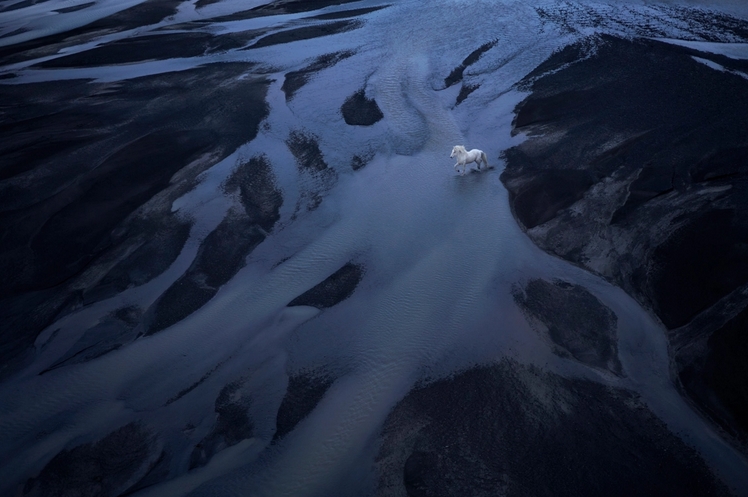
One of his most enchanting series to date, titled In the Realm of Legends, captures the one-of-a-kind beauty of Icelandic horses, who majestically roam the surrounding territory.

Though many opt to capture the stunning landscapes that Iceland has to offer, Doggett takes it one step further by also embracing its unique equestrian population to create a union of myth and fantasy that’s almost too good to be true.

During his time in Iceland, Doggett stayed on a farm with hundreds of horses. He was initially drawn to the enchanted landscape by tales of folklore. Such takes included the famous, eight-legged Icelandic horse named Sleipnir who is believed to be the spirit animal of the mythological god, Odin.

The stunning equine series highlights the relationship between the majestic breed of semi-wild horses—who are believed by some to be the “real-world” descendants of Sleipnir—and the extreme environment that they live in.

Reminiscent of a utopian world, the landscape features snow-covered expanses, roaring waterfalls, black sandy beaches, and icy lagoons. The majestic horses gallop, graze, and stand proud against the otherworldly backdrop, exhibiting their regal resilience to the extreme elements.


While Doggett usually shoots in black and white, he decided to use color for this series. “The light created brilliant hues that added a sublime texture to the entire series,” he explains. “Coupled with the contrast between the landscape and the horses, I knew this body of work demanded color.” The incredible photo series captures snow-white and beautiful brown horses contrasting against the pale, glacial blues and the dark shades of the sand and rocks.


Each image visualizes the horses’ powerful but calm natures amidst a wild landscape in constant chaotic motion. “The waterfalls are incredibly loud and almost violently beautiful, yet the horses were calm, standing mere feet from the millions of gallons of rushing water,” Doggett recalls. “Other times, we’d be shooting in thigh-deep snow in windy conditions, as the horses stood completely still.”
Source


VIDEO


Tuesday

Following are statistics from the USDA Market News Livestock Export Summary of horses shipped specifically designated for slaughter from the southern borders of the United States to Mexico in 2019.

In 2019 (through December 28), 53,947 slaughter horses were shipped from the United States to Mexico for slaughter. In 2018, 70,708 horses were shipped from the United States to Mexico for slaughter.

In 2017, 66,657 horses were shipped from the United States to Mexico for slaughter. Reports of horses shipped from the United States to Canada for slaughter were not available.

Is horsemeat safe for human consumption?

No. U.S. horsemeat is dangerous to humans because of the unregulated administration of numerous toxic substances to horses before slaughter.

In the U.S., horses are raised and treated as companion animals, not as food-producing animals. Unlike animals raised for food, the vast majority of horses sent to slaughter will have ingested, or been treated or injected with, multiple chemical substances that are known to be dangerous to humans, untested on humans or specifically prohibited for use in animals raised for human consumption.


Horses are gathered from random sources at various stages in their life, and there is no system in the U.S. to track medications and veterinary treatments given to horses to ensure that their meat is safe for human consumption. Due to concerns about the health threats of drug-laced horsemeat, the European Union (EU), a primary importer of North American horsemeat, suspended horsemeat imports from Mexico—where 87 percent of horses slaughtered for export to the EU are of U.S. origin.

EU authorities made the decision after a series of scathing audits that exposed a plethora of problems, including the lack of traceability of American horses and horrific suffering on U.S. soil and in Mexico.

Are there any other options for horses at risk of going to slaughter?

Yes. There are several ways to reduce the number of homeless or at-risk horses.

We can curb overbreeding, educate owners about other rehoming options and expand adoption work. Over 100,000 horses are sent to slaughter each year, and the vast majority would be rehomed; not every horse going to slaughter needs to go to rescue. The USDA documented that 92.3 percent of horses sent to slaughter are in good condition and are able to live out a productive life. These horses would be sold, donated or otherwise rehomed; however, kill buyers outbid legitimate horse owners and rescues at auctions, robbing horses of ever having a second chance at life.

The idea of slaughtering companion animals is unacceptable to the American people and will never be embraced. A 2012 national poll found that 80 percent of Americans support banning horse slaughter for human consumption. There are countries that consume dogs, cats and other pets as food, but we do not allow our dogs and cats to be exported for food purposes, even though there is a well-documented overpopulation issue to contend with for those animals.
Source

Saturday

Two talented ponies have proved their skills know no bounds as they appear to perform life-saving CPR on a collapsed rider.

Clever Albert and Ernie can be seen replicating the cardiopulmonary resuscitation procedure – including cycles of chest compressions and artificial breathing in this funny video created by professional trainer, Emma Massingale.

The 36-year-old, from Devon, roped her fiance Jeremy into the sketch to act as the ‘patient’ and used word cues to teach the accomplished duo the correct moves.

Albert and Ernie can even be seen sporting little sirens and carrying first aid kits in the cute footage.

Emma is the first British person to have developed a language that is so well understood by horses that she can communicate with herds of horses at anyone time.

The talented trainer said: “I just wanted to show people that ponies and horses can be just as clever and useful as dogs.


“They can be trained to do incredible things in the same ways that service dogs can and they can carry out all sorts of useful jobs which people might not have considered before.

“I’m not saying a pony can do actual CPR but I just wanted to show how intelligent they are in a light-hearted fun way that captures people’s attention and imagination.


“I’ve had Albert and Ernie for three to four years so the training is ongoing but this particular skill took a few weeks to perfect.

“The hardest thing was getting them to repeat the sequence – the compressions followed by the breaths – but they picked it up very quickly.

“The ponies were happy to play along and enjoyed every minute.”


VIDEO


Monday

A 35-year-old horse that became stuck in a creek bed has been freed after rescue teams worked for seven hours to save it.

Mishna the mare, who has already lived well beyond the 30-year average for a horse, will see another day after being rescued from a creek bed near Galstone, 36 kilometres north-west of Sydney. The horse's owner said the animal had been stuck since 7am and had called NSW Fire and Rescue after they realised, 7News reported.

Scott Hayward, who was part of the rescue team, said Mishna's age coupled with her size made getting it out difficult.

'We were going to try and walk it out but it was just physically too exhausted,' he said.

Getting Mishna out became a full team effort with 20 recuse officers including the SES police and a new recruit, who was off duty at the time, called in to help. Mr Haywood said the new recruit brought in his own digger to assist with the rescue.

He said the team from Blacktown have a 'technical vehicle' for larger animals that was also bought to the site to help with the effort. Just as it all started to look like a straight forward operation the sides of the banks fell in on Mishna.


'The banks of the creek started to collapse so that added some more difficulty to it,' Mr Haywood said.

At this stage she was suffering from severe exhaustion and the crew were forced to sedate her so they could dig her hooves out of the mud.


'We had to eventually sedate the horse...and put it onto a slide...everyone is really happy that we've had a successful outcome.'

Throughout the ordeal a vet was by her side and has given Mishna the all clear to go back to enjoying her retirement.

VIDEO

Tuesday

Fabrizio Giammatteo filmed a brave horse stand its ground against a pack of Italian wolves and its confidence in the situation probably saved its life.

Instead of showing fear and running, the horse embraced the wolves' presence and showed them who's in charge. At one point the horse even rolls around in the snow, putting itself in a completely defenseless position.

When asked what happened after the video ended, Fabrizio said "the horse just decided to go back eating some grass where he was before, leaving the poor wolves puzzled. After a few minutes the wolves decided to go away too."

The horse shows no fear, in fact he hardly seems to notice the wolves as they hover close to him and watch him as he walks around the field. At one point, he even nonchalantly lies down on the ground and rolls around in the snow!

Putting himself in such a defenseless position shocked the human onlookers. Fabrizio Giammatteo, who filmed the video, noted the horse surprised the wolves too.

Perhaps the wolves knew better than to anger the horse. Horses have powerful kicks and hooves that they will employ to ward off predators.


It is a strange encounter to be sure. 


 VIDEO

Thursday

Animal advocates are celebrating a major victory for a beloved herd of wild horses in Arizona’s Tonto National Forest, who are now officially protected from being removed and slaughtered.

The herd, known as the Salt River wild horses, became the center of a major controversy in 2015, when the Forest Service announced plans to remove them and auction them off. The agency argued they were stray livestock and not entitled to protection under the Wild and Free-Roaming Horse and Burro Act of 1971, and it was therefore not responsible for managing them.

That legislation was passed to protect wild horses from “capture, branding, harassment, or death,” but the agencies responsible for protecting wild horses, including the Bureau of Land Management and Forest Service, have continued to fail them, and thousands continue to be rounded up and removed from their rightful place on the landscape.

Fortunately, these horses were not without advocates, and news of the Forest Service’s plans sparked fierce public outrage. The Salt River Wild Horse Management Group (SRWHMG), which has been stewarding these horses in the wild for years, filed an injunction to stop the roundup and thousands of people from around the world made calls to protect them so loud officials and lawmakers couldn’t ignore them– a Care2 petition asking the Forest Service to leave them be in the wild gathered more than 220,000 signatures.

As a result of public outcry over their potential removal and slaughter, the Salt River Wild Horse Act was passed to protect them. Now, the SRWHMG, its partner the American Wild Horse Campaign and the public are celebrating an agreement that was reached to ensure their long-term protection and the enactment of that legislation, which finally went into effect on January 1.

“Two years ago, the Salt River wild horses were almost removed and slaughtered. Today is a great day. The Salt River wild horses are protected from harassment and slaughter. We are deeply grateful to Governor Doug Ducey for his compassion and dedication to protecting these cherished wild horses, to State Rep. Kelly Townsend for introducing the bill that made this agreement to protect the horses possible, and to the Forest Service for recognizing the public’s strong interest in protecting this historic and popular horse herd, ” said Simone Netherlands, President of the SRWHMG.


The new law requires the Salt River wild horses be protected from harm, harassment and slaughter, and are humanely managed in the wild through partnerships between federal, state and local authorities, and a non-profit, such as the SRWHMG, which stands ready to help.

“The Salt River Wild Horse Management Group, with our 100 volunteers and daily presence on the Salt River, is ready to roll up our sleeves and enter into an agreement with the state to continue our management of this wild horse herd that people from all over the world travel to see,” added Netherlands. “We are grateful for the enormous public support for our work, which has included the rescue and treatment of seriously injured Salt River wild horses, fixing miles of fencing to keep horses out of roadways and education/outreach activities to keep the public and the horses safe.”


Hopefully the Salt River wild horses will be around for generations to come and the awareness that was raised by their plight will encourage people to continue to speak up for thousands of other wild horses and burros living on public lands whose future in the wild remains in question.

The agencies responsible for managing wild horses should be protecting them, not subjecting them to brutal roundups or sending them to slaughter to benefit special interests who want to see them gone.
Source
VIDEO

Friday

California's wildfires reached San Diego County Thursday as a blazed named the Lilac fire near Bonsall quickly grew to engulf thousands of acres.

The newest fire raged through agricultural lands to the west of Interstate 15, affecting rural communities and prompting a scramble to save horses.

The Lilac fire quickly spread to cover 2,500 acres with zero containment by Thursday afternoon, prompting evacuations in several areas and affecting dozens of buildings. California Gov. Jerry Brown declared a state of emergency in San Diego County on Thursday night.

The San Luis Rey Downs training center was hit badly, with several barns affected and some deaths among the horses, according to local reports.

Locals quickly sprung to action on social media, sharing news of what was happening and aiming to coordinate rescue efforts.

Horse rescues have happened elsewhere this week. In Ojai in Ventura County, a group of volunteers organized themselves over Facebook and told photographers they'd saved some 100 horses from the nearby blaze.


California has been hit with multiple fires in multiple counties this week, stretching from Ventura in the north through LA County and Orange County right down to San Diego County.


VIDEO

A deadly combination of strong Santa Ana winds and dry vegetation have led to the ongoing blazes. Over 200,000 people have been evacuated and the fires have affected some 9.5 million people. California's fire season has stretched later into the year than usual and local conditions are drier than normal.
Source

Saturday

Stewart is leading the charge to slaughter America's wild horses and burros over the opposition of 80 percent of Americans," said Suzanne Roy, AWHC Executive Director.

"Putting his deputy at the helm of the agency charged with protecting these national icons is like putting the wolf in charge of the chicken coop."

"Americans don't want the government to be in the horse slaughter business, and Interior Secretary Zinke should appoint someone to lead the Bureau of Land Management who is committed to protecting, not destroying, America's historic mustangs," Roy concluded.

Roy added that the long-term leadership for this agency, which manages 245 million acres of public land in the West, should be determined through a full and transparent confirmation process, not a late-in-the-day political appointment by the secretary.

In July, the U.S. House of Representatives issued what AWHC called a "death warrant" when it passed the "Stewart Amendment" to a 2018 spending bill that would allow for the destruction of wild horses and burros the BLM considers to be surplus. The Senate has yet to weigh in on the subject, but if it concurs, the amendment could lead to the killing of more than 90,000 wild horses on the range and in holding facilities.

Stewart and Zinke are pushing for the destruction of America's mustangs to appease the special interest livestock lobby, which views wild horses as competition for cheap taxpayer subsidized grazing on public lands. (Public lands ranchers pay $1.87 per animal per month to graze livestock on public lands while the going rate for private land grazing in the West is $22.60.)


Livestock industry groups like the National Cattleman's Association are lobbying for the killing and slaughter of wild horses and burros on public lands even though 80 percent of BLM land grazed by livestock has no wild horses present on it.

AWHC is calling on Congress to reject the Stewart amendment in favor of appropriations language that would require the BLM to use non-lethal birth control to manage America's wild herds, as recommended by the National Academy of Sciences. The Senate is expected to release its 2018 Interior Appropriations bill later this month.
Source

Wednesday

“The affinity that indigenous peoples have with horses is very deep, and the traditional-minded folks, the elders, are the first to demand that the horses receive respectful treatment.”

There are an estimated 70,000 wild horses in the United States on land that the Bureau of Land Management says can only hold 20,000.

Congress is currently considering whether to overturn a 50-year-law that makes it illegal for the government to sell America's wild mustangs to horse meat facilities.

If the proposal is approved, up to 40,000 wild horses living on federal lands could be sold for $25 dollars a head as soon as October.

Lawmakers in the U.S. House of Representatives and Senate are locked in debate over what to do about wild horses which roam across Western range lands and reservations, competing with domestic livestock for food and water. Native American tribes and nations are also grappling with the problem. Everyone agrees something needs to be done to reduce the wild horse population, but what?

It’s an emotional issue which Native American tribes have struggled with for years. Some support roundups, but others, including elders and spiritual leaders, say the animals should be treated humanely and not sent to slaughter. The Northwest Tribal Horse Coalition, comprising five tribes and bands in Idaho, Oregon and Washington, says birth control won’t curb overgrazing, at least in the short term


An estimated 48,000 wild horses have the run of the Navajo Nation’s 7,000 square kilometers in Arizona, Utah and New Mexico.

Yazzie has initiated a horse capture program he considers more humane — luring the animals into a corral with bales of hay and feed, returning branded horses to their owners, euthanizing sick and old animals, and sterilizing others that can be returned to the wild. He is also looking to work with agricultural groups to domesticate the horses, and even revive the tradition of horse transport.


Friday

Robert Redford, Ed Harris, Elle Fanning, Ian Somerhalder and countless other equine enthusiasts joined The Humane Society of the United States to draw attention to the threat posed to wild horses and burros.

 "My family and I stand strongly against horse slaughter and against our government harming our wild horses," said actor and director Ed Harris. "I am pleading that a humane and common sense solution to the management of our wild horse population be mandated by Congress in keeping with the spirit of the Wild Free-Roaming Horses and Burros Act."

Provisions in the budget proposed by the administration would allow the BLM to kill captured wild horses or sell them without restriction—a change that would enable buyers to purchase wild horses on the cheap and haul them to Canada or Mexico for slaughter.

LETTER
We Stand with America's Wild Horses and Burros

Our nation's iconic wild horses are fighting for their lives and we cannot stand by silently and let that happen.

We the undersigned call on Congress to oppose provisions in the president's 2018 budget that threatens the lives of tens of thousands of wild horses and burros that will be senselessly killed or easily sold to those who would profit from their slaughter.


For decades, we have had available humane solutions, which would keep wild equines on the range and save tax dollars. Sadly, agencies continue to discredit proven alternatives instead of committing to implement them.

The American people have repeatedly and resoundingly called for wild horses and burros—the descendants of the animals who helped build our country, made our own freedom possible and shaped a vital part of our cultural heritage—to live free on the range.

As a nation, we can and must do better.


Respectfully, Robert Redford, Actor, Director, Advocate; Governor Bill Richardson, Politician; Wendie Malick, Actress, Advocate; Willie Nelson, Musician, Advocate; Ed Harris, Actor, Director; Amy Madigan, Actress; Lily Harris, Student; Elle Fanning, Actress; Ian Somerhalder, Actor; Carol Burnett, Actress; Ali MacGraw, Actress; Dr. Ross MacPhee Professor and Curator of Mammals, AMNH; Allen Rutberg, PhD, North Grafton, MA.; Bonnie-Jill Laflin, Fox Sports / BBC sportscaster; Priscilla Presley, Actress, Entrepreneur; Noah Wyle, Actor; Sam Elliott, Actor; Katherine Ross, Actress; Robert Gossett, Actor; Claire Forlani, Actress; Dougray Scott, Actor; Debbie Levin, CEO Environmental Media Association; Huey Lewis, Musician; Diane Warren, Songwriter; Scarlet Rivera, Musician; David Midthunder, Lakota Pipe Carrier, Actor; Amber Midthunder, Lakota Dancer, Actress; John Fusco, Writer; David Franzoni, Screenwriter, Geologist; Petrine Day Mitchum, Author, Film Historian; Robert Knott, Writer, Producer, Actor; Rex Linn, Actor; Rachael Worby, Artistic Director MUSE/IQUE; Lance Bass, Producer, Singer; Jill Rappaport, Media host, Advocate; Ed Asner, Actor; Mike Smith, Hall of Fame Jockey; Peri Gilpin, Actress; Laraine Newman, Actress, Comedian; Laura San Giacomo, Actress; Frances Fisher, Actress; Anjelica Huston, Actress; Jessika Van, Actress; Ray Abruzzo, Actor; Dan Lauria, Actor; Victory Tischler-Blue, Producer, Photographer; Tony Stromberg, Photographer; Amber Valletta, Actress; Kimberly Van Der Beek, Producer; Hart Bochner, Actor; Daryl Wein, Writer, Director; Olivia Newton John, Singer, Actress; Mickey Rourke, Actor; Jeff Franklin, Creator / Executive Producer; John Stamos, Actor; Beth Behrs, Actress; and Drew Carey, Comedian / Host

Stats

Archives

Pages